

For concerned friends and family of those struggling with addiction, getting the help their loved one needs can be a three-fold challenge: knowing where their role starts and stops in an addict’s recovery journey, supporting them with a mindset that leads to lasting recovery, and helping them find treatment that is a good fit.
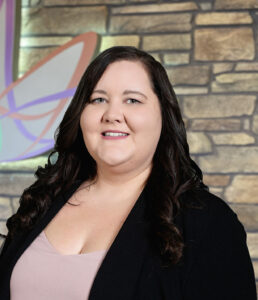 “The fundamental thing to understand is they have to come to their own decision about sobriety. You can’t make it for them,” advises Recovery Center Director, Taya Vonnahme, MSN, RN, ARNP, CADC. “If you want to influence them to seek help, talk to them clearly and calmly about your concerns. Make repeat offers to help find information about rehabilitation programs. Don’t nag and try to force them; gentle encouragement can go a long way.”
Vonnahme also points out that those supporting someone struggling with addiction need to take care of their own mental and physical health. Setting personal boundaries and knowing when it’s time to take a step back is necessary in getting them the help they need to fight this disease. If your health or safety are suffering because of their actions, cutting ties completely may be the rock bottom a loved one needs to get help.
Support for Lasting Recovery
Individuals who have watched loved ones suffer from addiction share that one of the most important things to do as a support system is help the addict know they are not alone or being judged. We know addiction is a disease and not a choice.
Showing empathy towards the addict as well as what got them to this point is also crucial. Past abuse or trauma, loss of identity due to retirement or a job loss, stress from family circumstances, and feelings of letting people down are all common examples of things that can push someone over the edge into the downward spiral of addiction.
“It’s important for people to get their stories out there and have them be heard,” notes Angela*, who has lost loved ones to addiction. “That’s the whole point of this process. They need to speak their truth, and they need to get their trauma and experiences out there and feel safe doing so. There’s just a lot of fear for addicts that there’s going to be judgement.”
The Right Fit
Finding support in community is one side of the coin for lasting recovery; finding proper treatment is the other. And that’s where options like MRHC’s Recovery Center come in.
“Many clients who come into the Recovery Center at MRHC start out thinking that they’re in this alone,” says an MRHC Recovery Center counselor. “They might not have the best family support or the best friends, some may have even led them down this path in the first place. At the Recovery Center, we like to reinforce that we’re all in this together and that every single person here has experienced an addiction in one way or another. All our counselors have had experience with addiction, whether it was our own personal addiction or an immediate family member’s. Clients find themselves able to truly open up and feel safe talking about it because we’ve all been there. We know how to get them through it.”
Uniquely located inside a hospital, MRHC’s recovery center bases their treatment, care, and support around the principle that there is no such thing as a “one size fits all” approach when it comes to recovery. Licensed counselors build relationships with each client to better understand who they are and where they are coming from to determine what strategies will best help them reach their drug or alcohol-free goals.
If you or a loved one needs help, contact the Recovery Center at (712) 655-2300.
*This individual’s name has been changed for privacy.

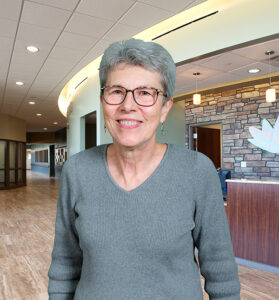 Even if you do not yet qualify for Medicare, MRHC’s volunteer SHIIP Counselor, Nancy Danner, recommends that “the best time to start getting information is before you actually need it, so I advise thinking about it at least 6-12 months before someone turns 65 years old.”
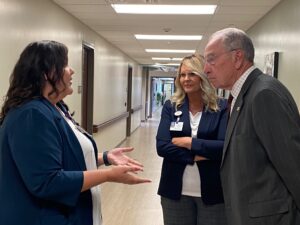
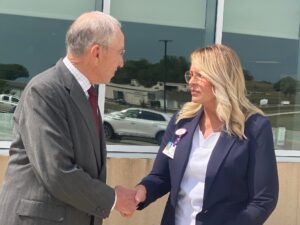
 U.S. Sen. Chuck Grassley (R-Iowa) toured Manning Regional Healthcare Center and met with hospital administration and board leadership on Monday, August 28, as part of his annual 99 county tour. Also present on behalf of MercyOne were Bob Ritz, CEO; Mary Cownie, Chief of Staff; and Mike Trachta, Vice President of Network Affiliates.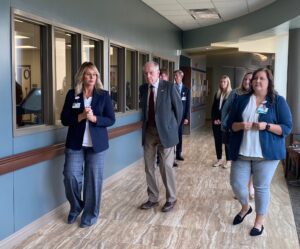
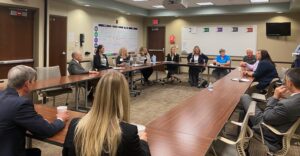

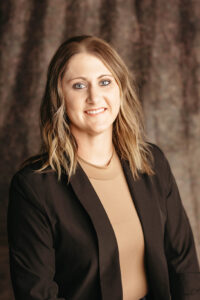 “Quality is one of our five key results and at the forefront of all our decisions. We want to provide the best quality care for each patient encounter,” shared Linn Block, CEO of MRHC and Blackwell’s mentor throughout her MBA process. “Jackie’s prior experience as a nurse combined with what she’s learned through her MBA program has provided her with the tools we need for this key role.”
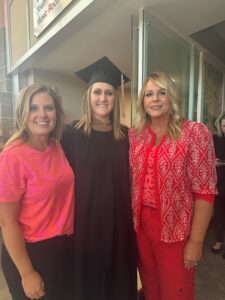 “Linn Block encouraged me to pursue my career goals and was my mentor throughout the MBA program. My career has always meant a lot to me, and we were raised to be hardworking children,” shared Blackwell. “I told Linn my goals and she was supportive of them and helped get me to where I am today. All of the senior team members played a part in this process, and I learned a lot from each of their management styles.”